Gender check: 11/22/11 – West

*Gender Checks are quick examinations of gender representation in individual news articles for the purpose of discovering trends over time. Click here to read more.

Website: Seattle Times

Seattle Times, 11/22/2011

On the Seattle Times, one of the lead articles featured on the home page as of 9 a.m. (PST) Tuesday, Nov. 22, was titled “Gregoire proposes half-cent sales-tax increase.” Its subject was the governor’s proposals to help deal with a budget shortfall.

Here is its gender breakdown:

Author: Male

Human sources  (listed in order mentioned):

  1. Female, governor
  2. Male, state Senate minority leader
  3. Male, university president
  4. Male, state House speaker
  5. Female, state Senate majority leader
  6. Male, state House minority leader


Website: Seattle P-I

On the Seattle P-I, one of the lead articles featured on the home page as of 9 a.m. (PST) Tuesday, Nov. 22, was titled “Boeing may pull out of Wichita.” Its subject was a possible facility closure.

Here is its gender breakdown:

Author: Male

Human sources  (listed in order mentioned):

None

Notes/analysis: The article includes statements from another newspaper, a company and a governor’s office.

Gender Check 11/21/11 – South

Website: The Miami Herald

On the Miami Herald, one of the lead articles featured on the home page as of 5:30 p.m. (EST) on Monday, Nov. 21 was “Chased By Law, Lotto Ticket ‘Courier’  Shuts Down Florida Service“. Its subject was the cancellation of an online Powerball site.

Here is its gender breakdown:

Author: Male

Human sources (listed in order mentioned):

  1. Female – Florida lottery secretary

Website: Patch (Seminole Heights)

On Patch of Seminole Heights, one of the lead articles featured on the home page as of 5:30 p.m. (EST) on Monday, November 14 was titled “Small Business Owners Beware of the Personal Guaranty.” Its subject was an advice column about the economy.

Here is its gender breakdown:

Author: Male

Human sources (listed in order mentioned)

none

Gender check: 11/17/11 – Midwest

*Gender Checks are quick examinations of gender representation in individual news articles for the purpose of discovering trends over time. Click here to read more.

Website: St. Louis Post-Dispatch (stltoday.com)

Stltoday.com, 11/17/2011

On Stltoday.com, one of the lead articles featured on the home page as of 9:40 a.m. (PST) Thursday, Nov. 17, was titled “Mizzou football coach Gary Pinkel arrested, suspected of DWI.” Its subject was a football coach arrested for suspicion of driving while intoxicated.

Here is its gender breakdown:

Author: Male

Human sources  (listed in order mentioned):

  1. Male, sheriff’s major
  2. Male, coach (suspect)
  3. Male, athletic director


Website: St. Louis Beacon

On the St. Louis Beacon one of the lead articles featured on the home page as of 9:40 a.m. (PST) Thursday, Nov. 17, was titled “Local E. coli outbreak has peaked, source of bacteria still unknown, say officials.” Its subject was an E. coli outbreak still under investigation.

Here is its gender breakdown:

Author: Male

Human sources  (listed in order mentioned):

  1. Female, spokeswoman for department of health and senior services
  2. Female, CDC epidemiologist

“Nonsense” or not, Cain allegations bring attention back to gender-based workplace struggles

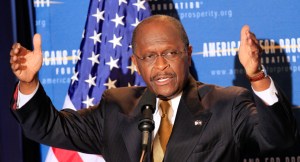
It’s no surprise the allegations of sexual harassment against GOP presidential candidate Herman Cain are still grabbing headlines weeks after Politico first reported the National Restaurant Association settlements with two women.

But more surprising, or at least eye opening, has been the media discussion about sexual harassment as a legitimate offense. Politics have always been clouded by sex scandals, recently demonstrated by the likes of Anthony Weiner and John Edwards. In these cases, the misconduct was clearly inappropriate.

With sexual harassment, however, the lines between appropriate and uncomfortable can be seen as blurred. The Gender Report decided to take a deeper look at the definition of sexual harassment, and the different takes the media have had in regards to the Cain allegations.

History and statistics

Sexual harassment is defined by Title IX of the Civil Rights Act as “unwelcome sexual advances, requests for sexual favors, and other verbal or physical conduct of a sexual nature…” when the conduct “explicitly or implicitly affects an individual’s employment, unreasonably interferes with an individual’s work performance, or creates an intimidating, hostile, or offensive work environment.”

One Yale scholar described the inclusion of sexual harassment in this sort of legislation as “momentous.” Before this time, sexual harassment was not necessarily seen as a serious offense and often blamed on sensitivity or over-exaggeration on the part of the victim. Most companies now have explicit sexual harassment policies in place. The Civil Rights Act put sexual harassment on the same level as harassment or discrimination based on race, religion, or disability.

The most famous case of sexual harassment came in 1991 when Anita Hill claimed Supreme Court Justice Clarence Thomas sexually harassed her during her time as his assistant. (The Christian Science Monitor, The Washington Post, and the Huffington Post were just a few media outlets to compare the Hill controversy to the current coverage of Herman Cain.)

In Fiscal Year 2008, the U.S. Equal Employment Opportunity Commission received 13,867 charges of sexual harassment. 15.9 percent of those charges were filed by males. A November 16 ABC/Washington Post poll found 1 in 4 women reported harassment in their workplaces.

Cain and the media

As is the case for several claims of sexual harassment or violence, Cain has labeled the four women who accused him of harassment as anything from “troubled,gold-diggers, and outright lairs planning a coordinated effort to derail his bid for president. He also accused the media of “fundamentally unserious” journalism for reporting the allegations. A recent Fox News poll stated that over half of voters think politics or the possibility of financial gain are behind the claims.

Other voices in the debate are praising the women for coming forward, as well as trying to bring the focus back to the broader issue of continued discrimination, in the form of harassment, against women in the workplace. As one blogger for Forbes concludes:

“What’s news isn’t so much that sexual harassment still happens, but that in 20 years, we haven’t come any closer to fixing it and have actually been downgrading it as a serious workplace challenge.”

Here are some other news articles and well-written opinions about the topic: