FDA overruled in decision on contraceptive

In what was called a “rare” and “politicized” split between the FDA and the Health and Human Services Department, emergency contraceptives will still require a prescription for those under 17 years old.

Kathleen Sebelius, the HHS secretary, overruled the FDA conclusion that Plan-B One Step was safe for younger girls to use as an over the counter medication. This was the first time the department’s secretary has overruled and FDA commission in policy decisions. Both the FDA and Sebelius issued dueling press statements, spurring on the dueling coverage in the press.

A Fox News opinion columnist called the decision miraculous, saying “now parents don’t have to worry about their thirteen-year-old daughters picking up death-causing drugs while buying bubble gum and the latest Teen Beat at local drug stores.” Similar sentiments from the Washington Times concluded that “the liberal support of young teens having wide access to post-sex contraception is part of the slow, but steady unraveling of moral code in this country.” (Another columnist for the Times published a piece supporting the use of Plan B.)

Other groups angered by Sebelius’s ruling called the decision a setback for science. Susan Wood, a Washington Post columnist and former FDA assistant commissioner for women’s health, called the decision a “betrayal” of Obama’s pledge to uphold scientific integrity and that “no other over-the-counter medication has the FDA ever required extra data for a particular age group.”

On Thursday, President Obama released a statement supporting Seibelius’s decision. He called on his role as a father and said that although he did not play a role in the overruling, he thought “most parents” would feel as he did.

The FDA’s commission on the contraceptive determined that the product was safe and effective in adolescent females, that adolescent females understood the product was not for routine use, and that the product would not protect them against sexually transmitted disease. Seibelius based her decision on her doubt that the pill was safe for girls as young as 11 years old, and that the data submitted “do not conclusively establish that Plan B One-Step should be made available over the counter for all girls of reproductive age.”

Plan B, also known as the “morning after” pill, has been on the market since its FDA approval in 1999 and has never been far from controversy. It became available without a prescription to those 18 and older in 2006, and to 17 year olds in 2009 after a federal court’s recommendation. Its generic version, Next Choice, also came onto the market in 2006. Other controversy around the pill rose as pharmacists began to refuse to fill prescriptions for it and other forms of birth control.

Check out some of the other discussions on the topic:

This is the Gender Report’s Week in Review, a weekly post that highlights some of the major stories related to gender issues this week. Some of these stories may have already appeared in our News Feed or in the week’s Gender Checks. We’ll at times include a longer analysis of stories as well as bring attention to stories that may have slipped through the cracks of the week’s news cycle.
Gender Check 12/5/11 – South

Website: The Miami Herald

On the Miami Herald, one of the lead articles featured on the home page as of 8:30 p.m. (EST) on Monday, Dec. 5 was “Miami-Dade Director Reinvents P.E.”. Its subject was an overhaul of the school system’s physical education courses.

Here is its gender breakdown:

Author: Female

Human sources (listed in order mentioned):

  1. Female – assistant superintendent
  2. Female – teacher
  3. Female – professor
  4. Male – athletic coach

Notes/Analysis: The photo accompanying this article was of the two female students rock climbing.

Website: Patch (Seminole Heights)

On Patch of Seminole Heights, one of the lead articles featured on the home page as of 8:30 p.m. (EST) on Monday, Dec. 5 was titled “Tis the Season to Give a Fruitcake?.” Its subject was the socially acceptable times, or lack thereof, to gift this holiday tradition.

Here is its gender breakdown:

Author: Male

Human sources (listed in order mentioned)

none

Gender Check 11/28/11 – South

Website: The Miami Herald

On the Miami Herald, one of the lead articles featured on the home page as of 7:30 p.m. (EST) on Monday, Nov. 28 was “Colombian FARC Hostage Describes Narrow Escape“. Its subject was an exclusive interview with a police sergeant held by rebels for over 12 years.

Here is its gender breakdown:

Author: Male

Human sources (listed in order mentioned):

  1. Male – hostage
  2. Male – president of Colombia (from public statement)
  3. Male – Colombian defense minister

Notes/Analysis: The photo accompanying this article was of the released hostage, male, and three other military men.


Website: Patch (Seminole Heights)

On Patch of Seminole Heights, one of the lead articles featured on the home page as of 7:30 p.m. (EST) on Monday, November 28 was titled “Looking For Gas Bargains? Try These Pumps.” Its subject was a look t area gas stations to compare prices.

Here is its gender breakdown:

Author: Male

Human sources (listed in order mentioned)

none

Week in Review: A look at the Middle East

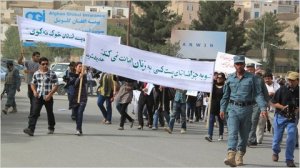
Photo credited to BBC Persian, from the New York Times. Participants marched against the widespread public sexual harassment of women on the streets of Kabul, Afghanistan, last July.

As political and social change continues to sweep through Egypt, Libya, Yemen and several other parts of the Middle East and Africa, the Gender Report looked at the key role women are playing in these processes. We’ve written before about protests, participation in marches, and pushes for representative government in these areas. Here are a few updates in these cases we found in our News Feed, as well as their representation in the media:

  • Libya: Women continue to speak out against rapes committed during the country’s long civil war, asking the new government to provide financial, legal and counseling support to victims. Read more via the Associated Press (as syndicated by the Washington Post).
  • Afghanistan: Nicholas Kristof, an avid supporter of women’s rights, featured a guest post by Noorjahan Akbar on his New York Times blog on her experiences with women marching for awareness of sexual harassment concerns. The post also highlighted organizations and women that are continuing this fight.
  • Egypt: The safety of female journalists in Tahrir Square continues to make headlines as another women, this time a female broadcast journalist from France, was assaulted while covering the protests. The organization Reporters Sans Frontieres, recanted a recommendation to remove female journalists from Tahrir Square for their own safety, after many journalists criticized the statement. One opinion piece for the Guardian said “If women journalists are told it’s too dangerous for them to go there, those voices are likely to be silenced altogether.” The Gender Report earlier highlighted the sexual assault of a “60 Minutes” reporter in February.

Have you seen or read other coverage of women in the Middle East? Post a comment or tweet it to the Gender Report or our News Feed, @GRNewsFeed or @GenderReport.

Gender Check 11/21/11 – South

Website: The Miami Herald

On the Miami Herald, one of the lead articles featured on the home page as of 5:30 p.m. (EST) on Monday, Nov. 21 was “Chased By Law, Lotto Ticket ‘Courier’  Shuts Down Florida Service“. Its subject was the cancellation of an online Powerball site.

Here is its gender breakdown:

Author: Male

Human sources (listed in order mentioned):

  1. Female – Florida lottery secretary

Website: Patch (Seminole Heights)

On Patch of Seminole Heights, one of the lead articles featured on the home page as of 5:30 p.m. (EST) on Monday, November 14 was titled “Small Business Owners Beware of the Personal Guaranty.” Its subject was an advice column about the economy.

Here is its gender breakdown:

Author: Male

Human sources (listed in order mentioned)

none