Claims of DSK accuser’s ‘weakened credibility’ whip media into frenzy

New drama over the Dominique Strauss-Kahn sexual assault charges turned into a media frenzy over the last week as the credibility of the alleged victim was called into question.

The New York Times broke the news June 30 that prosecutors were finding holes in the woman’s story and that the case was possibly near collapse. The following day, Strauss-Kahn, a 62-year-old French politician and the former head of the International Monetary Fund, was released on his own recognizance.
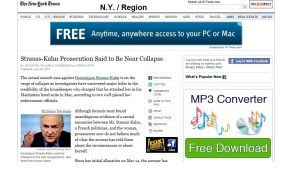
This story from the New York Times broke the news about prosecutors questioning the accuser's credibility in the Strauss-Kahn case on June 30.

The actual incident in question took place in May when a 32-year-old housekeeper from Guinea entered the Strauss-Kahn’s suite in a New York hotel to clean it. What happened in the next 20 minutes is what’s under dispute. She’s said it was assault while representatives of Strauss-Kahn have claimed it was consensual. (For some of the details of the incident, see “What happened in room 2806” from the New York Times.)

Among prosecutors’ claims regarding her credibility were that the woman had lied about abuse on her asylum application, had ties to people with criminal backgrounds (including a man she visited the day after the incident and spoke with and some “unexplained” deposits in her bank account), discrepancies on tax returns and changes in her account of what happened that day. However, as many sources have noted, prosecutors did not call into question the sexual assault itself.

Her attorney spoke to the press about the allegations as well as pointed out the strong physical evidence that is still present in the case. He also said the woman would come forward and share her story. Thus far, others have come out to speak to the woman’s credibility, including her union, and have pointed out that these claims of her “lying” may not be what they seem. More often, it has been a case of her listening to poor advice. A statement from the Hotel Workers’ Union pointed out that if she did lie regarding her immigration and tax forms it only makes her “one of probably millions of people who have done the same things.” (For more, read “DSK maid fights back” from the Daily Beast.)

From there, the media erupted both at home and abroad. Since these revelations, the story has grown with now other legal suits coming into play.

Most striking from a media standpoint has been a New York Post cover story that claimed the woman was a “hooker.” She is now fighting back by filing a suit against the Post.

Her credibility wasn’t the only being challenged. Shortly after stories came out about the New York case crumbling, a French writer, Tristane Banon, who had claimed that Strauss-Kahn had tried to
assault her in 2003, announced she would officially accuse him. His lawyers responded by saying they would file a counter complaint against Banon.

Dozens of opinion pieces and analyses have been written on the case. A few can be found linked to below.

Some of the key points of discussion have been the dangers of narratives — whether it was that people were too quick to believe the claims of sexual assault were true because it was a typical case of “the powerful vs. the powerless” or that others were grappling with a belief that a victim must be “perfect” or without blemish. Others have simply pointed out that none should be too quick to judge either side.

Concerns additionally have been expressed over what this attention and treatment will mean for future rape or sexual assault victims (and their likelihood to report their experiences). Writers have pointed out that high-profile cases like this feed into the myth that a disproportionate percentage of sexual assault claims are false. In reality, it’s estimated to be between 2 and 10 percent.

Also receiving attention was the fact that U.S. news sources are continuing their practice to not name the woman involved. We’ll be addressing that issue separately in an upcoming post.

Update (July 11): The next court date in the case has been postponed until Aug. 1 to allow time for further investigation, according to an Associated Press article.

This is the Gender Report’s Week in Review, a weekly post that highlights some of the major stories related to gender issues this week. Some of these stories may have already appeared in our News Feed or in the week’s Gender Checks. We’ll at times include a longer analysis of stories as well as bring attention to stories that may have slipped through the cracks of the week’s news cycle.

Gender Check 7/8/11 – South

*Gender Checks are quick examinations of gender representation in individual news articles for the purpose of discovering trends over time. Click here  to read more.

Website: The Miami Herald

Miami Herald, 7/8/11

On the Miami Herald, one of the lead articles featured on the home page as of 10:30 a.m. (EST) on Friday, July 8 was titled “Space Shuttle Atlantis Ready for Launch; Weather May Not Be.” Its subject was the upcoming last shuttle launch from NASA.

Here is its gender breakdown:

Author: Female

Human sources (listed in order mentioned):

  1. Male – flight director

Website: Patch (Seminole Heights)

On Patch of Seminole Heights, one of the lead articles featured on the home page as of 10:30 a.m. (EST) on Friday, July 8 was titled “NASA Tweetup Offers Lively View of Atlantis Launch Watch.” Its subject was also coverage of the pending space shuttle launch and twitter users who are discussing the mission.

Here is its gender breakdown:

Author: Female

Human sources (listed in order mentioned):

  1. Female – twitter user

A look at the representation of women in articles of “national” online news outlets

Our purpose here at The Gender Report has been to identify how women are represented in online news and how that compares to traditional media. One of the ways we’re doing that is to look at those sites that are online-only news sources specifically and women’s presence in their coverage and staffs.

Last month, we examined the number of female principal staff at the online news outlets listed in the Columbia Journalism Review‘s News Frontier Database, based on what was included in the sites’ individual database entries. We found that 28 percent of these top editorial staff members were women.

“National” sites in the News Frontier Database

The News Frontier Database, CJR’s collection of searchable data and write-ups on online news outlets, now has a total of more than 130 entries including sites that are nationally situated as well as those that pertain to a particular state or location. It was these “national” sites that we decided to take a closer look at this month.

The database currently contains 40 sites under the “national” search, with three added since June 3, the day we last took a look at it. Those additions still leave these sites in the 19 and 20 percent range in terms of the percentage of women in their principal staffs, which is lower than the overall total.

On July 1 we visited all 40 of these websites at about 11 a.m. (PST) and pulled the top or lead article, which we then “gender checked,” including taking note of the subject, gender of the author (or authors) and the gender breakdown of the sources referenced.

Here’s what was found:

Sourcing

Women made up 22 percent of the sources in the 40 articles monitored. That broke down to 71 male sources and 20 female sources.

Our sample included three stories with one or more female source that contained no male sources. These were also the only articles with more female sources than males — in other words, if a story had male sources, it always had more of them than females.

Fourteen stories that used one or more male source had no female source. These articles contained as many as eight sources total, all of which were male.

Interestingly, 13 stories in the sample cited no human sources. In most cases it was because these quoted other news sources (i.e. according to the New York Times) or were alternative story forms like charts or lists.

Authorship

Of the articles in the sample, 12 were written or produced by a woman, 23 by one or more man, three with a shared byline between one or more man and one or more woman, and two credited to staff. That puts women at 34.3 percent of bylines of those articles that were written by a person of one gender or the other.

As a note for further study, we’ve had regular occurrences of stories we’ve monitored be written by more than one man but very few if any written by just more than one woman. That’s something we’ll keep an eye on in the future.

When gender matters

With this study, we opted to see if the author’s gender made a difference in the use of female sources. It turns out that it did.

The 12 stories written by women used 13 male sources and eight female sources, putting women at 38 percent.

Meanwhile, the 23 stories written by men contained 45 male sources but only five female sources. That meant women were only 10 percent of sources.

For the stories that were produced by both a man and a woman, the percentage was closer to that of female authors, at 37 percent. That separated out to 13 male sources and seven female. Stories attributed to “staff” had no sources as they were both lists.

With or without women as “principal staff”

With the differences seen by the author’s gender, we also decided to take our data a step further and look at it based on our previous study of the gender breakdown of the sites’ “principal staff.” For simplicity, we took the findings from the 23 national sites that listed no females among their principal staff members and compared them to those of the 17 sites with at least one female staff member.

Though the sites with at least one female listed appear to have better representation of women as both authors and sources, the difference was particularly apparent in bylines. Of the lead articles from national online news outlets with no females as principal staff, women had 23.8 percent bylines. Those with at least one female had parity overall with women as 50 percent of authors.

In sourcing, a look at articles from news sites with no principal female staff showed women as 19.3 percent of sources. At sites with one or more female at the top, that percentage reached 26.5 percent.

It’s true that other factors could be at play in these sites to create these differences. More research would need to be done to see if there are other shared characteristics. From initial glance at the data, both groups — those sites without a female principal staff member and those with — include those of the full range of editorial staff sizes as well as coverage topics with few exceptions.

Comparison

This is just one small sample, so further research will be needed to determine how these findings hold up and to see if other factors are at play. However, in comparing the overall percentages of female sources and authors in this study to those of others, it appears to be on target.

The Global Media Monitoring Project (2010), in its first study that included monitoring news websites, found that women were 23 percent of news subjects and bylined 36 percent of stories in its sample.

And, in the first quarter of our weekly Gender Checks of eight online news sites across the United States, we found that thus far women were 24.6 percent of sources and had 31 percent of bylines.

For more data on gender representations in online news, check out our “Findings and Statistics” category or visit our “Useful Resources” page.

Gender check: 7/7/11 – Midwest

*Gender Checks are quick examinations of gender representation in individual news articles for the purpose of discovering trends over time. Click here to read more.

Website: St. Louis Post-Dispatch (stltoday.com)

On Stltoday.com, one of the lead articles featured on the home page as of 9:30 a.m. (PST) Thursday, July 7, was titled “St. Louis closes 18th Street bridge for emergency repairs.” Its subject was closures as a result of repairs to a bridge.

Here is its gender breakdown:

Author: Male

Human sources  (listed in order mentioned):

  1. Male, traffic commissioner

Notes/analysis: The story was only five graphs long and simply detailed expected closures, delays and alternative routes.

Website: St. Louis Beacon

St. Louis Beacon, 7/7/11

On the St. Louis Beacon, one of the lead articles featured on the home page as of 9:30 a.m. (PST) July 7, was titled “As anti-terrorism funding shrinks, controversy grows over how to spend it.” Its subject was cuts to funding bringing about debates in how the security funds should be used.

Here is its gender breakdown:

Author: Male

Human sources  (listed in order mentioned):

  1. Female, Department of Homeland secretary
  2. Male, U.S. representative
  3. Male, U.S. representative
  4. Male, public safety administrator
  5. Female, director of emergency services and homeland security
  6. Male, task force member
  7. Male, research fellow
  8. Male, U.S. senator
  9. Male, spokesman for male U.S. representative
  10. Female, spokeswoman for female U.S. senator
  11. Male, U.S. representative
  12. Male, spokesman for male U.S. senator

Notes/analysis: The article also contains a number of mug shots of sources — four of men and one of a woman.

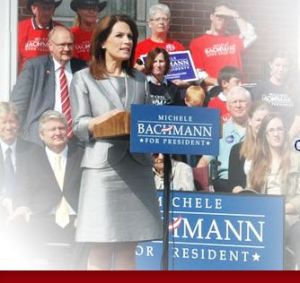
Michele Bachmann shies away from image as “feminist” frontrunner

Image from http://www.michelebachmann.com home page

As the primaries for the 2012 Republican nomination come into full swing, one candidate stands out in the race not necessarily for her positions or her politics, but for her gender.

Minnesota Rep. Michele Bachmann officially announced her candidacy last week, and subsequently dominated the week’s news cycle, a considerable amount of which focused on her specific role as the only female candidate in the GOP race, and if nominated, the first female nominee for president from a major political party.

Many news sites focused on finding a label for Bachmann’s approach to politics, repeatedly asking her if she considers herself a feminist. Bachmann “demurred” from the question from the Washington Post, saying  “I consider myself a woman, an accomplished woman,” she said. She noted that many men are energized by her candidacy, and added that there is a fascination with a female presidential hopeful because of its novelty.”

But some think Bachmann could hold a unique demographic by embracing the dicey “f” word of politics. The LA Times said the word could “be the most polarizing label on the sociopolitical stage.” However, A CNN article speculated she would “cringe” away from the title, but went on to comment that her self-defined brand of “evangelical feminism” could be exemplified in her candidacy, which she has referred to as her calling from God.

Also of interest to the media’s exploration of Bachmann’s candidacy was the role of her husband, specifically in their “fundamentalist patriarchal model of marriage” as described by a Slate columnist. Though POLITICO described Marcus Bachmann as “enthusiastically embracing” his wife’s run, the article went on to say he could be more of a political liability than other spouses of candidates. The Gender Report has previously covered the role of spouses in political campaigns, and found similar pressures and vetting in other candidacies.

And Bachmann is not the only one responsible for raising the visibility and participation of women in Republican politics. POLITICO reported on a group of freshmen GOP congresswomen who don’t “neatly fit the traditional model of women” who typically run for office and are working to combat views that the Democratic party better represents the female constituency. But even in this group, only one, Rep. Renee Ellmers, of the nine women featured identified herself as a feminist. Washington Rep. Jaime Herrera Beutler, the youngest of the freshmen women, said she “doesn’t easily accept” the feminist label; she called herself instead pro-woman, just like I’m pro-family, just like I’m pro-man.” Currently Democratic female representatives hold 64 seats in the House, compared to the 29 Republican seats.

On the other side of the aisle, Sen. Kristen E. Gillibrand, who filled Secretary of State Hilary Clinton’s vacated seat in 2009, is also working to elevate women’s role in political activism. Her organization, Off the Sidelines, recruits and raises money for female candidates. The New York Times said Gillibrand “epitomizes the ways in which women are asserting themselves in politics these days. “

No doubt as this primary season unfolds, Bachmann’s gender and role, or denial thereof, as a candidate advancing the position of women will extend beyond just this initial coverage, and we hope her candidacy will continue to push women from all ideologies to involve themselves in American political discourse.

For more statistics and studies on women in politics, check out the Center for American Women in Politics to find statistics and information from Rutgers University.